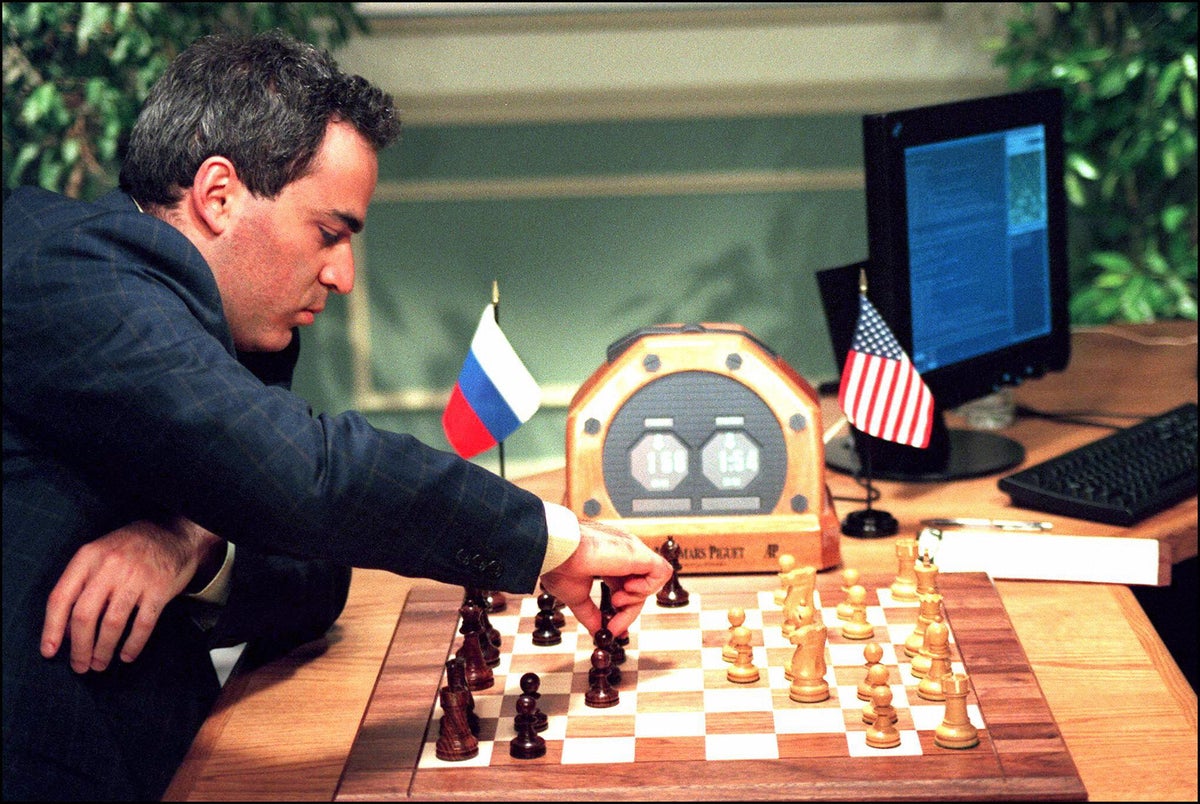
When IBM's Deep Blue first toppled Kasparov in '97, we glimpsed something profound: the inversion of human intellectual supremacy. That chess match wasn't just about moving pieces on a board—it was the opening gambit in a larger game where artificial intelligence would systematically encroach on domains we believed uniquely human. Today, we stand at another inflection point. The companies that grasp this aren't merely adopting AI tools; they're architecting entirely new organizational DNA around machine intelligence.
The landscape tells the story plainly. AI-first companies compress development cycles from quarters to weeks, and attract the kind of talent that once flocked to social media pioneers. But here's what most miss: being AI-first isn't about technology adoption. It's about a fundamental rewiring of how value gets created, decisions get made, and markets get conquered. The next decade won't belong to the digitally transformed—it will belong to the artificially native.
The Anatomy of an AI-First Enterprise
An AI-first company doesn't bolt artificial intelligence onto existing processes like chrome on a vintage Cadillac. These organizations emerge from first principles, asking not "how can AI improve our workflow?" but rather "what would we build if AI was our primary substrate?" The distinction is crucial. Most businesses today are, at best, AI-aware—sprinkling chatbots and analytics dashboards across their operations like digital garnish. True AI-first companies operate from an entirely different playbook.
When you crack open the hood of these organizations, several patterns emerge. Traditional problem-solving hierarchies dissolve. Processes don't accommodate AI; they emanate from it. Human judgment becomes the exception, deployed only where machine intelligence genuinely falters. Perhaps most telling: these companies value AI fluency the way previous generations valued MBAs. The cultural shift is palpable—from "let's check if AI can help" to "AI is how we think."
The distinguishing characteristics reveal themselves in practice:
- Artificial intelligence serves as the default cognitive toolkit
- Organizational structures mirror neural networks more than org charts
- Legacy methods persist only as edge cases
- Continuous experimentation replaces annual planning cycles
- Scale becomes a function of compute, not headcount
- Teams prize algorithmic thinking over domain expertise alone
The Compounding Advantages of Artificial Primacy
The benefits of AI-first architecture aren't linear—they compound. Like Bezos's famous flywheel, each advantage reinforces the others, creating what Rex Woodbury might call "increasing returns to intelligence." Let me illuminate the mechanics.
Velocity as Competitive Moat
AI-first companies don't just move faster; they operate at fundamentally different clock speeds. Where traditional firms measure product cycles in quarters, these organizations think in sprints measured in days. I've watched companies compress what once took months of engineering into afternoon experiments. This isn't merely about efficiency—it's about learning velocity. Each iteration generates data, each dataset improves the models, each improvement accelerates the next cycle. The gap widens exponentially.
The New Economics of Decision-Making
Here's what fascinates me: AI-first companies make thousands of micro-decisions per second that traditional organizations agonize over in quarterly planning sessions. Dynamic pricing, personalized user experiences, resource allocation—all happen in real-time, guided by intelligence that learns from every interaction. The cognitive burden of management shifts from making decisions to setting parameters for decision-making systems. It's a profound inversion of the executive function.
Talent Arbitrage and the Great Redeployment
Perhaps most counterintuitively, AI-first companies attract better human talent. Why? Because they liberate people from the drudgery that consumed previous generations of knowledge workers. When machines handle the modeling, the memo-writing, the pattern-matching, humans ascend to higher-order work: ethical considerations, creative leaps, relationship orchestration. The irony is delicious—by centering artificial intelligence, these companies become more deeply human.
The Treacherous Path to Transformation
Yet transformation demands more than proclamations and pilot projects. The failure modes are predictable and painful. I've observed companies hemorrhage talent, corrupt invaluable datasets, and build elaborate AI capabilities that solve precisely zero customer problems. The challenges cluster around several fault lines.
Data remains the limiting reagent. Not just quantity—though scale matters—but quality, recency, and relevance. Privacy regulations tighten while data gravity increases. The tension between personalization and protection will define the next wave of innovation. Then there's the human element: workforces trained for one game suddenly finding the rules rewritten mid-play. Cultural antibodies reject the artificial transplant. Middle management, sensing existential threat, marshals resistance.
Most insidiously, execution complexity scales faster than anticipated benefits. What works in a Jupyter notebook struggles in production. What succeeds in one vertical fails catastrophically in another. The gap between demo and deployment remains wider than most founders admit.
Industry Metamorphosis: The Coming Disruptions
The Schumpeterian gale of creative destruction will blow strongest through industries with specific characteristics: high-frequency decisions, rich data exhaust, and expensive human judgment. My thesis is that we'll see cascading transformations across several domains.
Healthcare stands on the precipice. When diagnostic accuracy exceeds human physicians and treatment personalization reaches the individual genome level, the entire care delivery model inverts. Manufacturing, despite its physical constraints, will see artificial intelligence optimize every atom of material flow. Financial services—already algorithmic at core—will shed their remaining human interfaces like snakes molting skin.
The Inexorable March Toward an AI-First Future
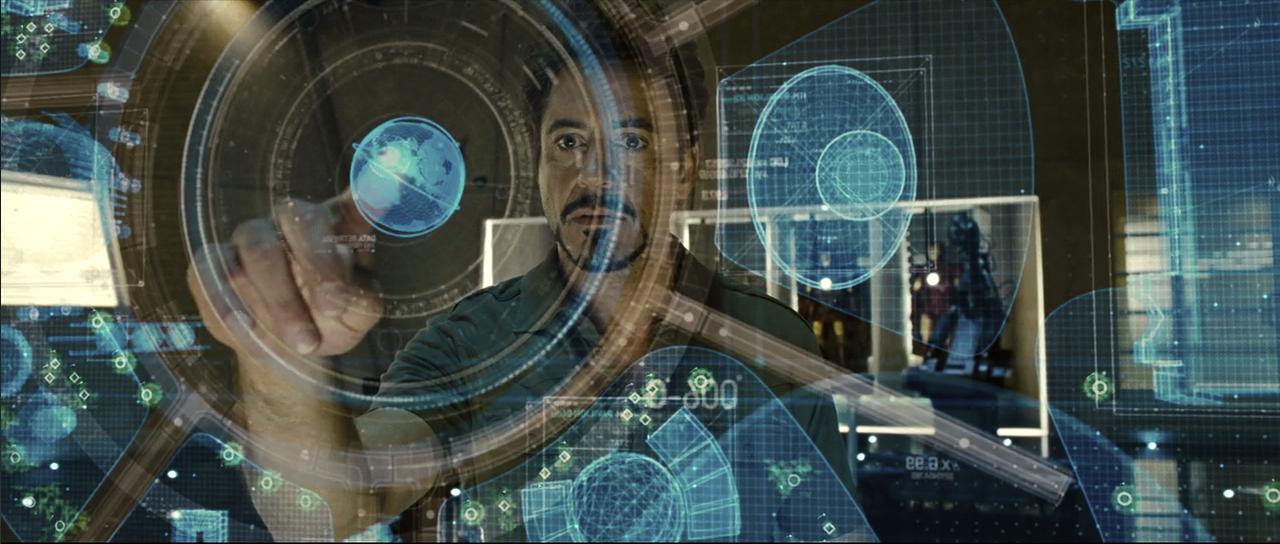
Standing here in 2025, the trajectory seems inevitable. The companies architecting themselves around artificial intelligence today will compound advantages that become insurmountable tomorrow. This isn't techno-determinism—it's pattern recognition. Every technological revolution follows similar arcs: dismissal, experimentation, adoption, dominance. We've moved past dismissal. The experimenters are pulling ahead.
The question confronting every founder, every board, every allocator of capital is no longer whether to become AI-first, but whether they can transform quickly enough to matter. The window is narrowing. The cognitive capabilities that once differentiated firms—analysis, prediction, optimization—are being commoditized at silicon speed. What remains? The deeply human: imagination, empathy, the ability to navigate ambiguity and forge connection.
The paradox is elegant: to remain human, we must first become artificial. The organizations that grasp this—that build their foundations on machine intelligence while elevating human creativity—will define the next decade. The rest will provide case studies for business school professors wondering what went wrong.
The game is afoot. The board is set. Your move.